MEDIA RELATIONS · COMMUNICATIONS · CREATIVE
The Message That Broke the Silence
In Vietnam, the barrier to breast cancer screening was not medicine. It was silence. The idea was to convince the media to break it.

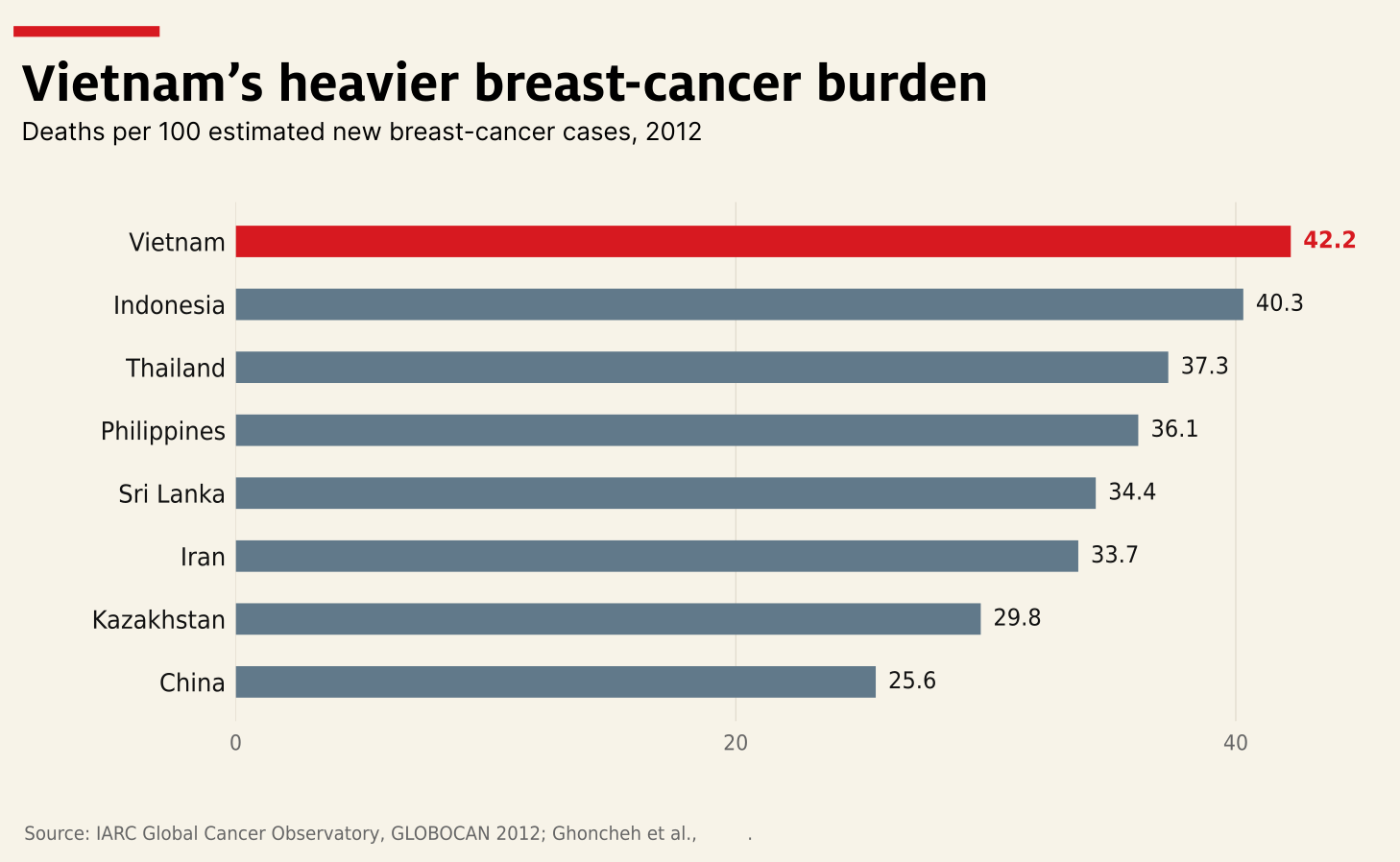
Vietnam had one of the highest breast cancer mortality rates in Southeast Asia. It also had one of the strongest cultural taboos against discussing it. The country had doctors, hospitals, and a decade of government-funded public health programs. None of it moved the needle. By 2014, the mortality rate sat at 35%, roughly 3 times higher than neighboring Thailand, Cambodia, or Laos. The gap was not explained by a shortage of medicine, money, or education. Vietnam had access to early detection. What it lacked was a way for anyone to bring the subject up.
Vietnamese culture holds a belief that runs deeper than superstition. Bad things are not discussed, because discussing them increases the odds they will find you. You do not linger on a colleague's bankruptcy, because financial trouble has a way of spreading to those who pay it too much attention. This is not ignorance. It is a coherent, widely shared worldview in which language has consequences. And it made breast cancer almost impossible to address. Women did not raise it with their doctors, because raising it made it more likely to be true. Doctors did not raise it with patients for the same reason. Families did not raise it with each other. The silence was not a failure of awareness. It was the system working exactly as designed.
So women waited. And in breast cancer, waiting is the thing that kills.
The Ministry of Health needed to change the conditions around diagnosis. Not just for women over 40, but for the whole country: families, doctors, clinics, anyone who might nudge a loved one toward a check-up or be in a position to catch something early. The problem had a supply side and a demand side, and both were frozen.
The answer was a code:
( . )( . )
A few punctuation marks. A visual shorthand that looked more like a joke than a public health initiative. That was exactly the point.
The emoticon gave people a way to reference breast cancer without saying the words. You could text it to your mother, your wife, your friend. Text it to a dedicated number and it connected them, quietly and indirectly, to information about scheduling a screening. No difficult conversation required. No bad omen invited. The person receiving it understood the gesture without either party having to name what they were gesturing at.
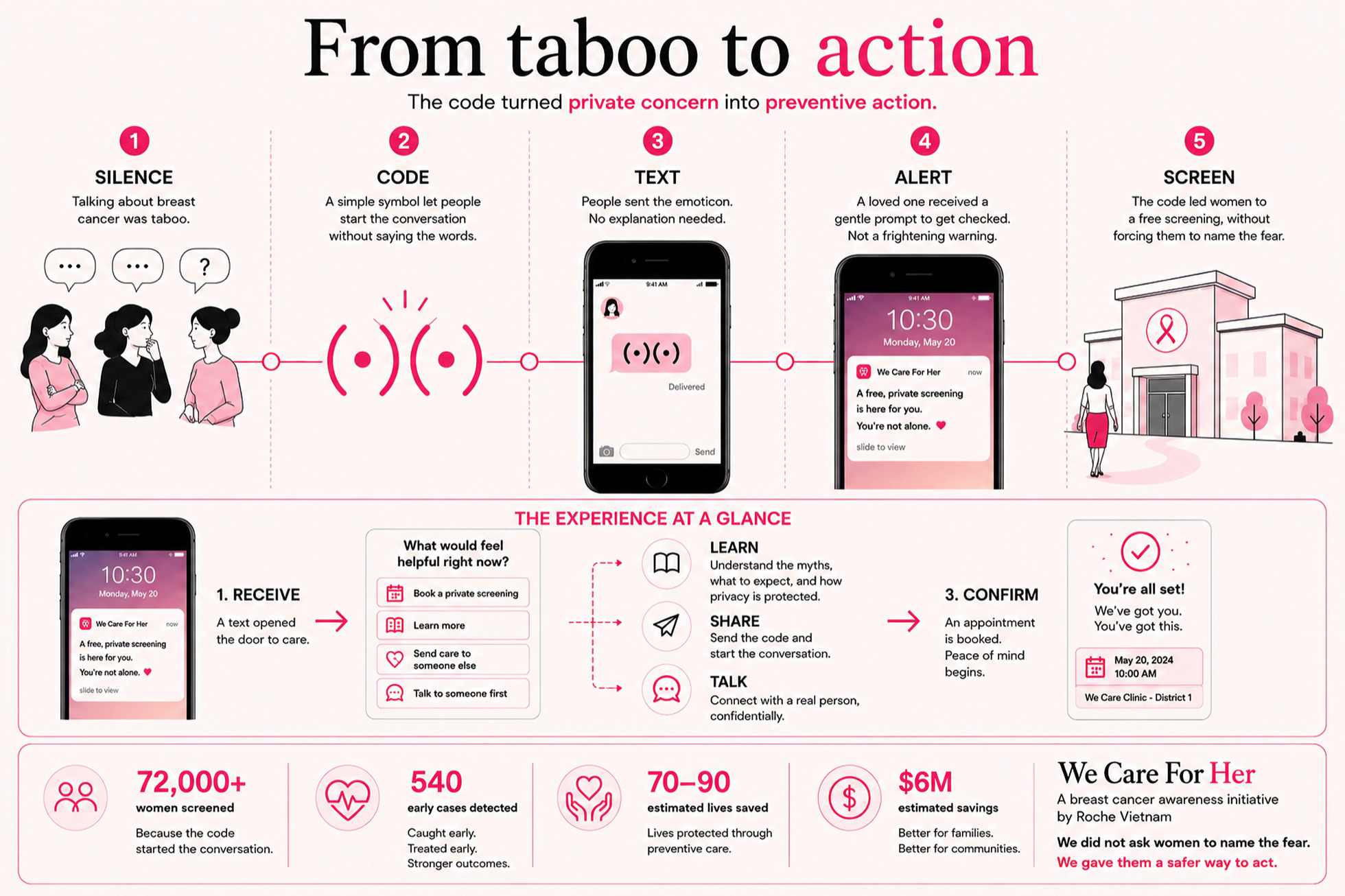
It was, in the most literal sense, a way to talk about breast cancer without talking about breast cancer.
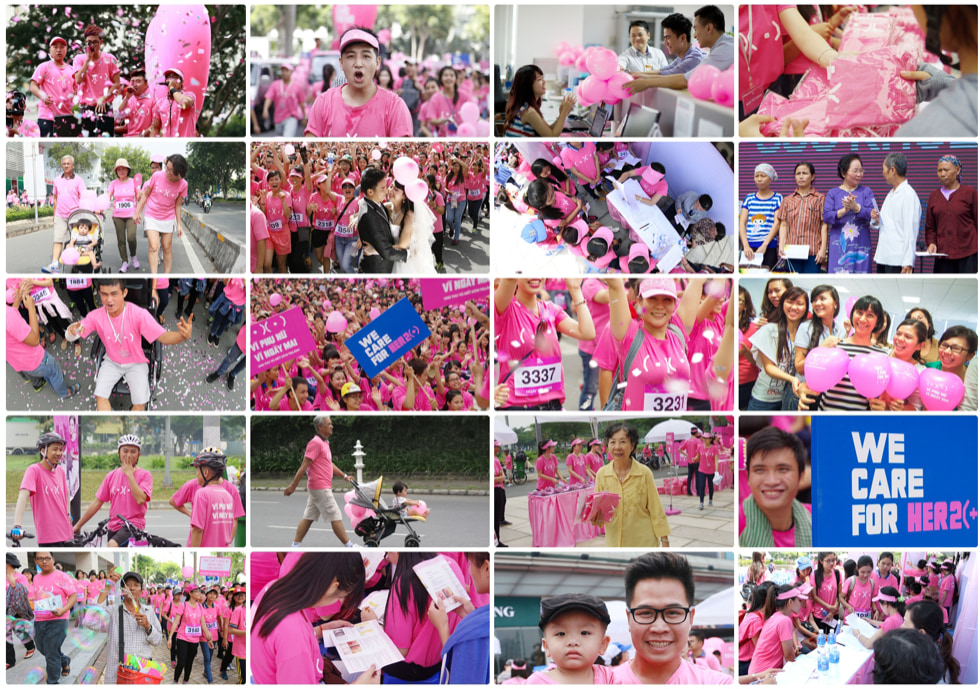
Around that symbol, the initiative built outward. Animated films. A song by Vietnam Idol winner Uyen Linh. Content that helped the symbol travel from phone to phone across the country. On Vietnamese Women's Day, Pink Parade events drew more than 10,000 people in cities nationwide, covered by every major TV network. Men wore pink ribbons. Children carried the symbol in the street. Vietnam's Vice-President attended. Families practiced, in public, something they had not been able to do at home.
The work also extended into the health system, training more than 600 healthcare professionals in how to begin the conversations their patients couldn't start. Referral pathways, mobile screening clinics, patient forums. Without a path to act on it, awareness is just weather.
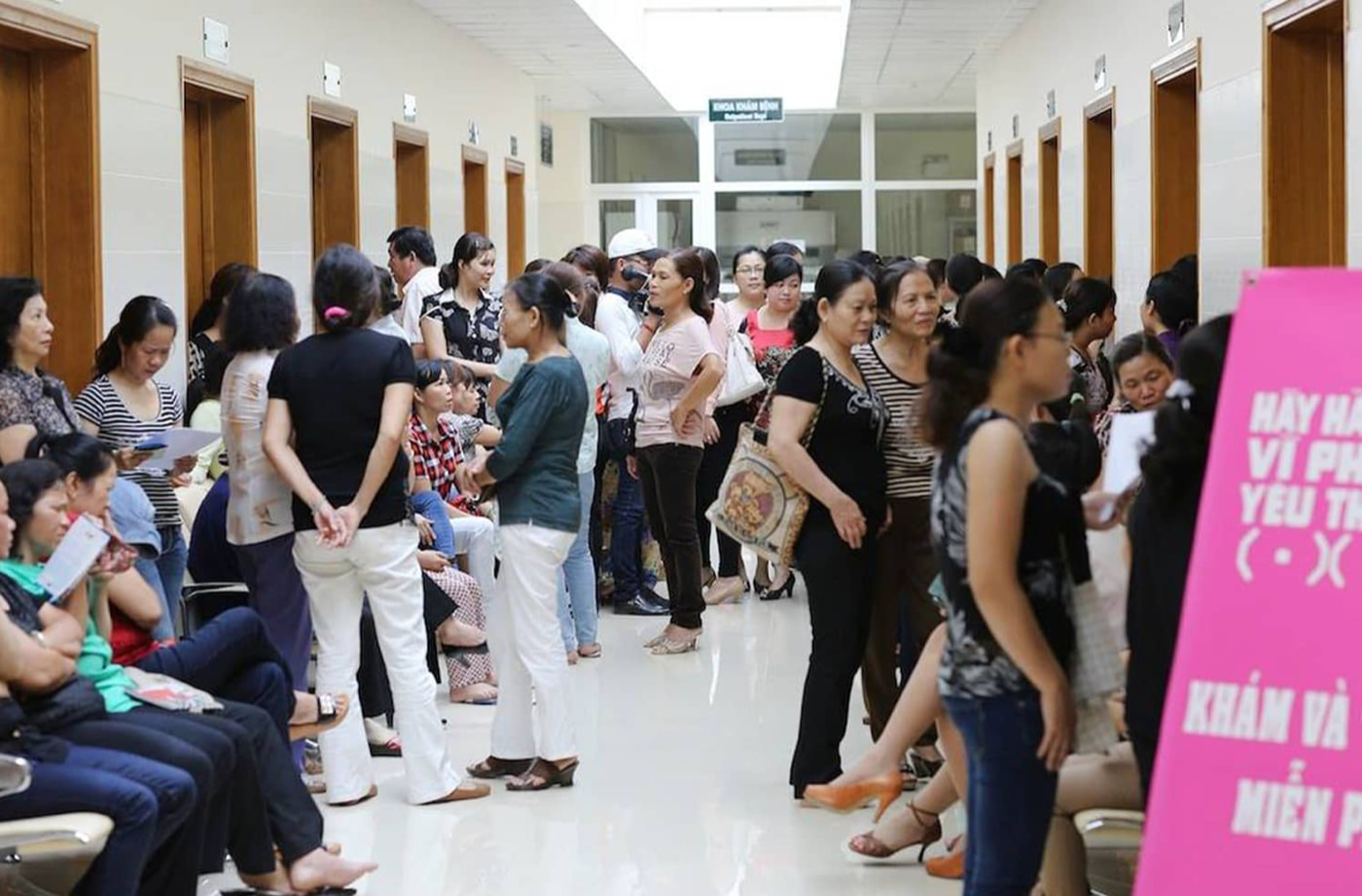
Over the life of the program, more than 72,000 women were screened. Breast cancer screening was later added to routine health checkups for women over 40 nationwide. Vietnam's first breast cancer survivor's club was launched. The work became a case study at Vietnam's national university. And in 2015, the Ministry of Health updated the national Health Insurance Law to include dedicated coverage for HER2+ breast cancer medications, a direct result of the pressure the initiative had helped build.
The government had spent years trying to make breast cancer a public health priority. It turned out the country first needed permission to whisper about it. Once it did, the policy followed.