COMMUNICATIONS · BUSINESS STRATEGY · MEDIA
The Trouble With Being Too Famous
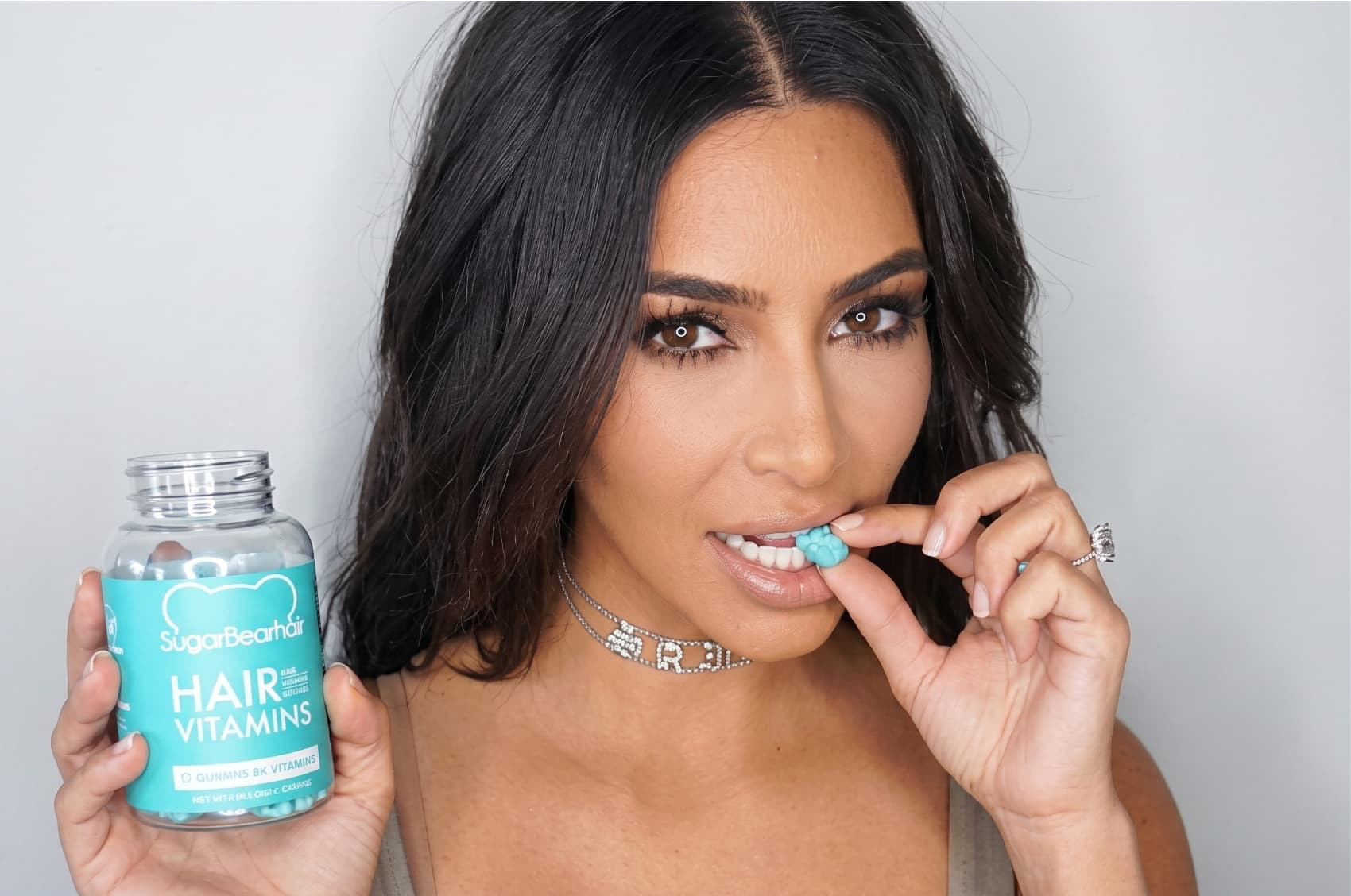
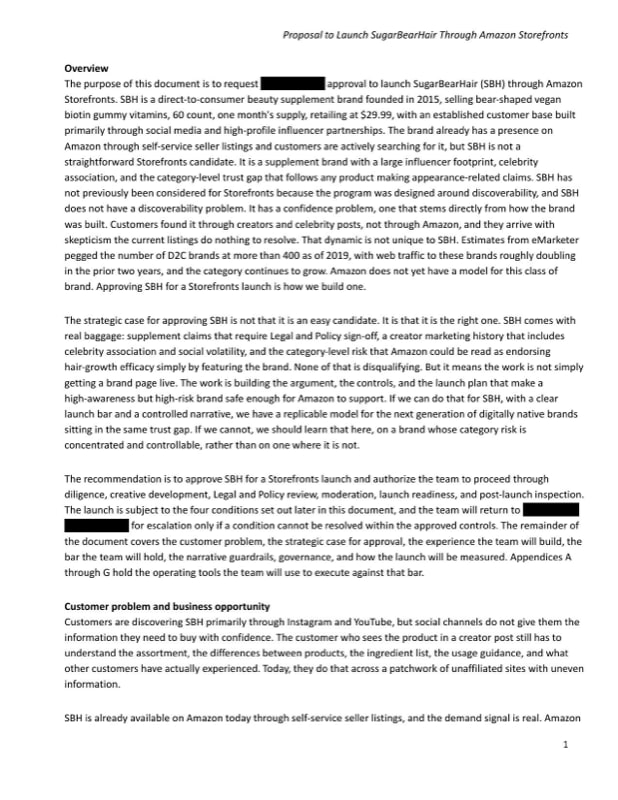
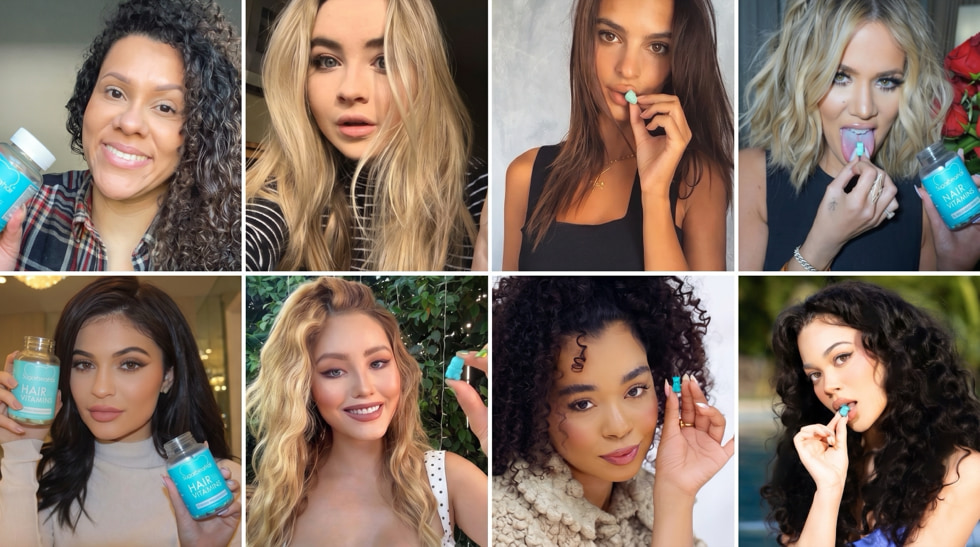
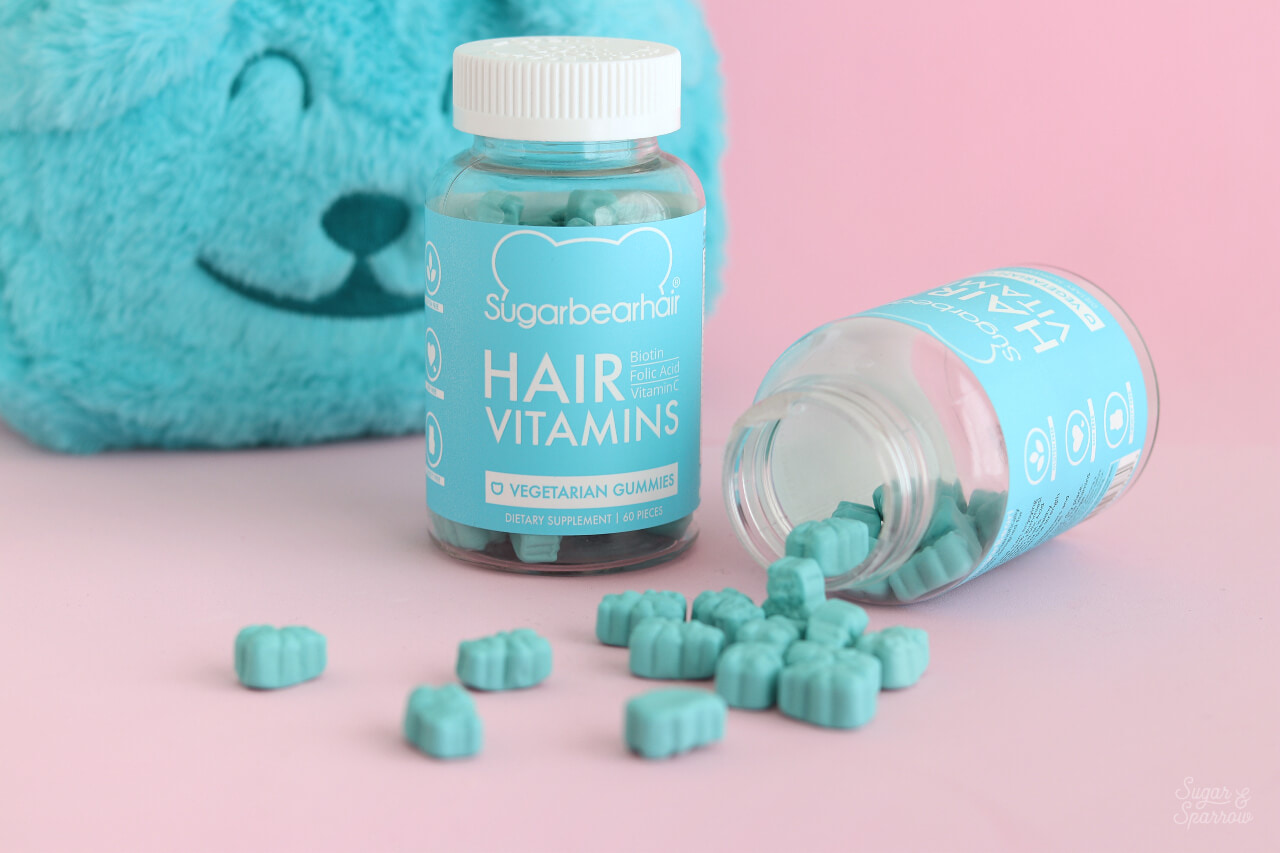
Amazon Storefronts was built to introduce customers to small businesses they had not heard of. SugarBearHair was not that kind of small business. Founded in 2015, it was a direct-to-consumer beauty supplement brand selling bear-shaped vegan biotin gummies, with a reputation built almost entirely through Instagram, YouTube, and celebrity-adjacent influence. It arrived with 957,000 Instagram followers and Kardashian-Jenner endorsements, but that visibility created a different problem. Storefronts was designed to solve obscurity. SugarBearHair’s issue was the suspicion that follows a brand made famous before it has been made credible.
Storefronts had no model for over-amplified brands
Storefronts had been built with a specific political purpose: to counter the public narrative that Amazon was destroying small businesses by surfacing brands buried deep in search results, invisible without help. The program's ideal candidate was undiscovered. SugarBearHair was the opposite. It had awareness, a devoted customer base, and had effectively created the beauty-supplement gummy category from scratch. It did not fit the program's founding logic, which is precisely why it exposed the gap.
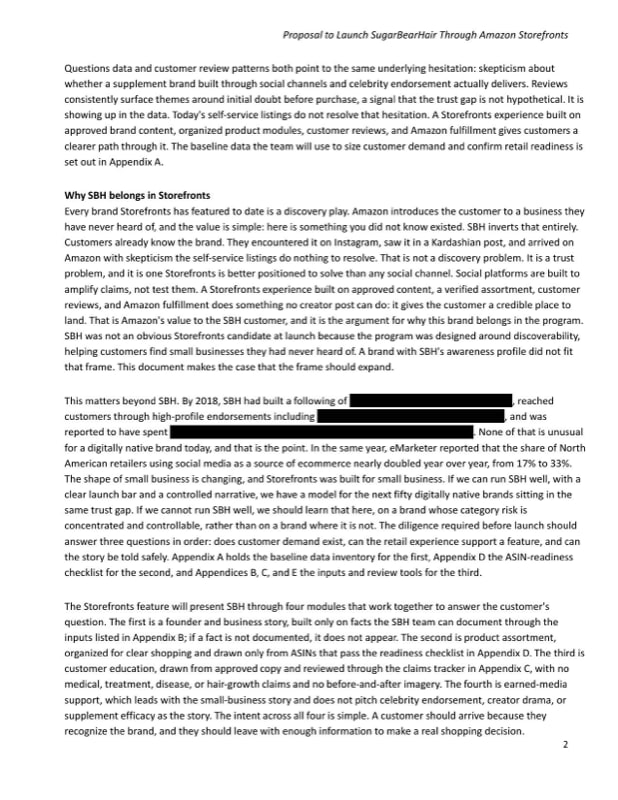
eMarketer reported that the share of North American retailers using social as a source of ecommerce had nearly doubled year over year, from 17% to 33%. More than 400 D2C brands were operating, with web traffic roughly doubling in two years. SugarBearHair, a $29.99 supplement brand that had reportedly spent $316,000 on influencer marketing in a single month, exposed the problem directly. Google search data from 2018 showed the largest single category of organic searches around the brand sat under what analysts labelled "Efficacy & Proof": queries like "does sugarbearhair actually work," "sugarbearhair reviews," and "sugarbearhair before and after."
Customers were searching for evidence the marketing had not given them.
The risk was contained, and worth taking once
The opposing position was straightforward. Supplement claims, celebrity association, social volatility, and the risk that Amazon would appear to endorse hair-growth efficacy were all real. A program protecting its association would wait for a cleaner candidate.
Hubert spotted the opportunity, brought it to a brand team that had not considered Storefronts, wrote the internal case for three department heads, and ran the approval through both sides. The risk was clear, contained, and worth taking once here, on a brand where the category exposure was limited, rather than later on one where it was not. Approval was the investment. The model was the return.
The launch plan was a rulebook
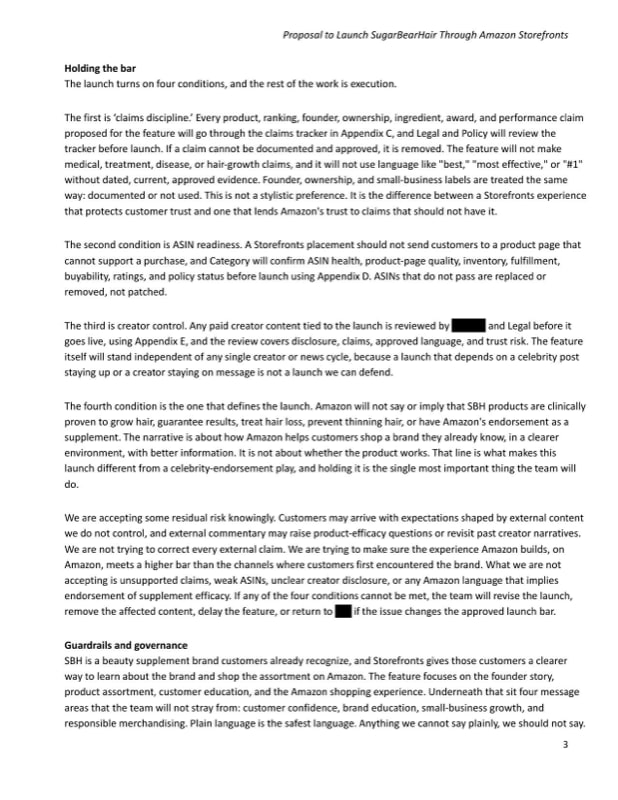
The launch document did not sell the brand. It sold a set of rules that made the brand approvable.
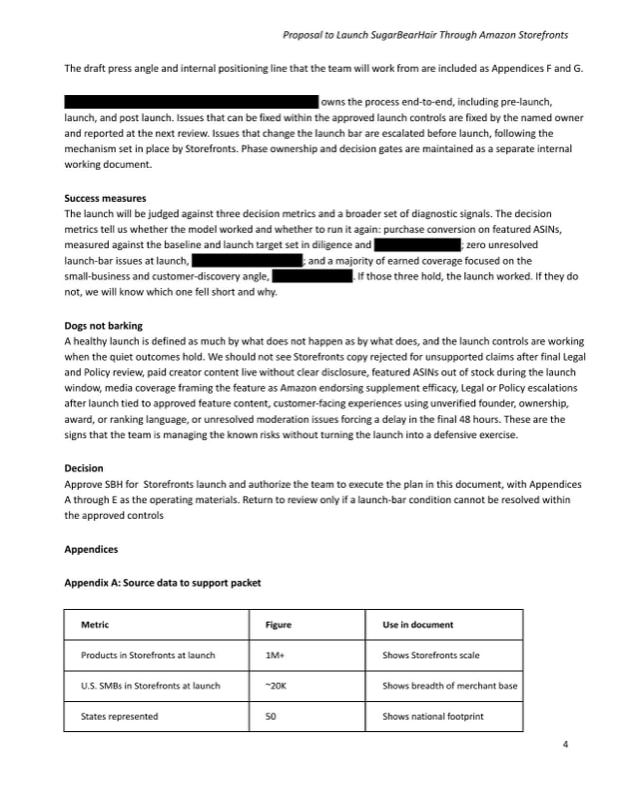
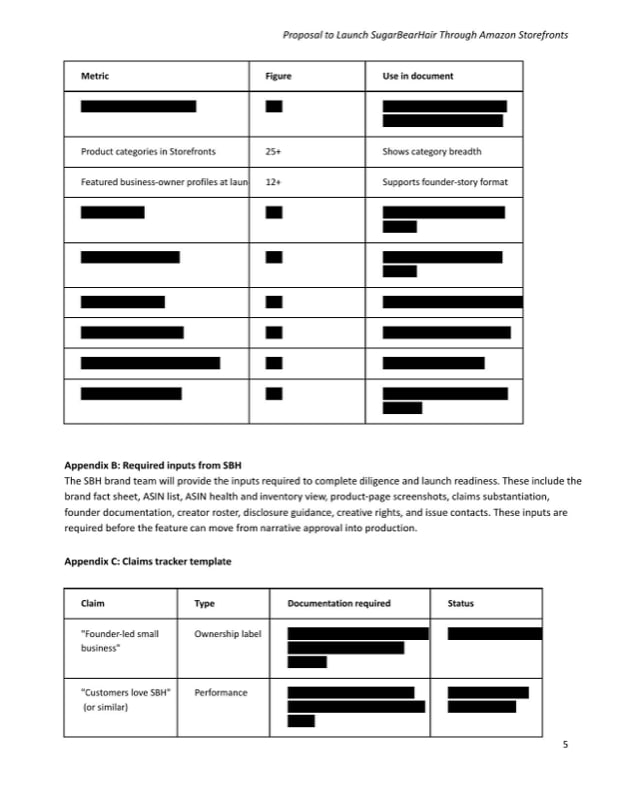
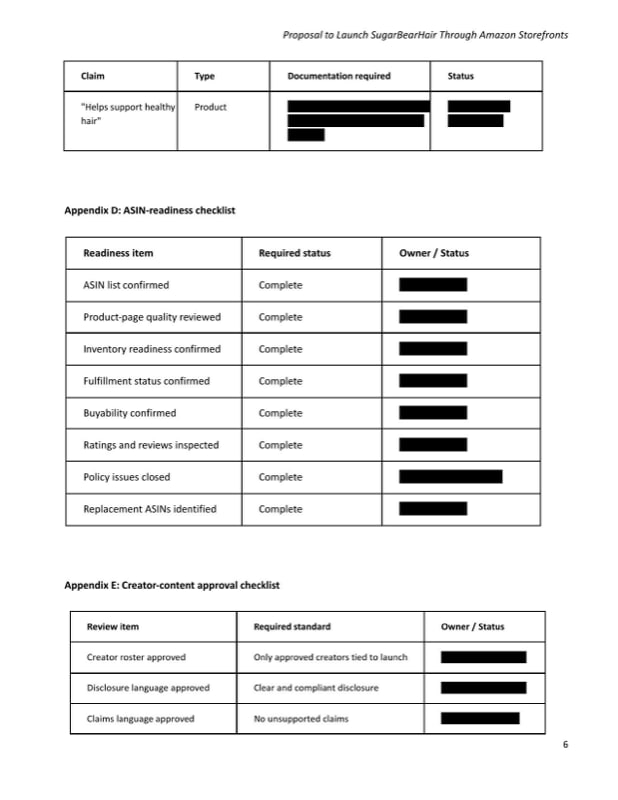
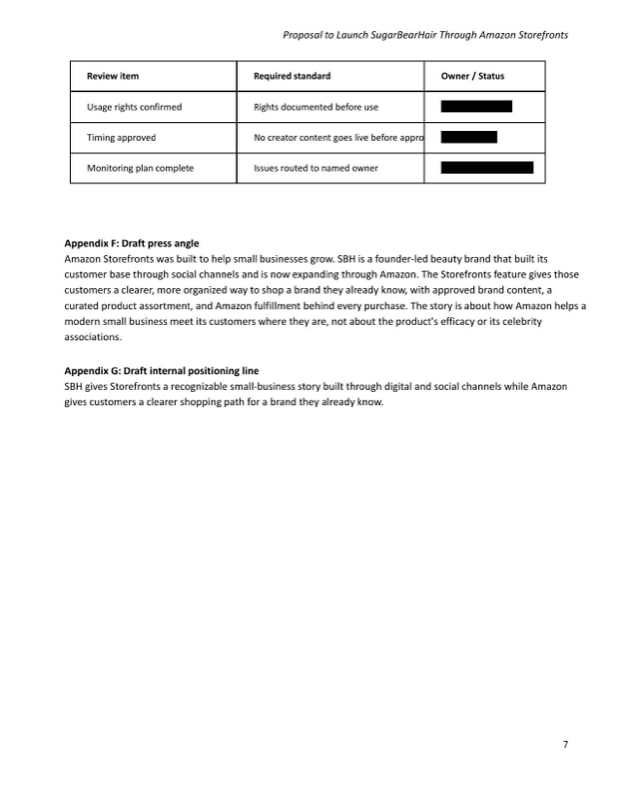
There were four. First, every product, ranking, and performance claim had to be documented and reviewed by Legal and Policy before publication. No medical or hair-growth claims. No "best" or "number one" without dated evidence. Second, every product page had to be checked for stock, fulfillment, ratings, and buyability before placement. Pages that failed were replaced, not patched. Third, every paid creator post tied to the launch had to be reviewed for disclosure and approved language before going live. Fourth, Amazon would not say, imply, or allow inference that SugarBearHair grew hair. That was the line the whole launch sat on.
Framed that way, the rules were the reason approval was defensible.
Third-party validation answered what customers were searching for
Customers were searching Google for proof. Hubert led the engagement with ConsumerLab, an independent testing organization that evaluates health and nutrition products for efficacy and ingredient accuracy, to put the product through external review. ConsumerLab's assessment was not a clean endorsement. It found the product overpriced compared to comparable supplements. That honesty mattered. The evaluation still cleared the product on efficacy and ingredient accuracy, and the willingness to publish the cost criticism made the rest of the assessment harder to dismiss. It gave customers what no creator post and no Amazon page could supply: an independent judgment with no stake in the sale.
Results
- SugarBearHair monthly sales on Amazon moved from approximately $50,000 to approximately $1 million following the Storefronts launch
- Internal approval secured from three department heads for a category the program had not previously cleared
- Four-condition launch bar established as the intake standard for the brand class
Why it matters
The brands winning in social-native commerce did not have a discovery problem. They had a proof problem, and no platform in that ecosystem was built to solve it. Trust is not something a brand can manufacture on its own. It is built by the retail platform around it, and reinforced by third parties with no stake in the outcome. Any category where social marketing has outrun customer confidence sits in the same gap. The Storefronts work for SugarBearHair was the first version of the model that closes it.
Launch plan