DOCUMENTARY · CREATIVE DIRECTION · COMMUNICATIONS
The Line in the Sand
A car company, a documentary crew, and a line on a map that nobody had bothered to mark
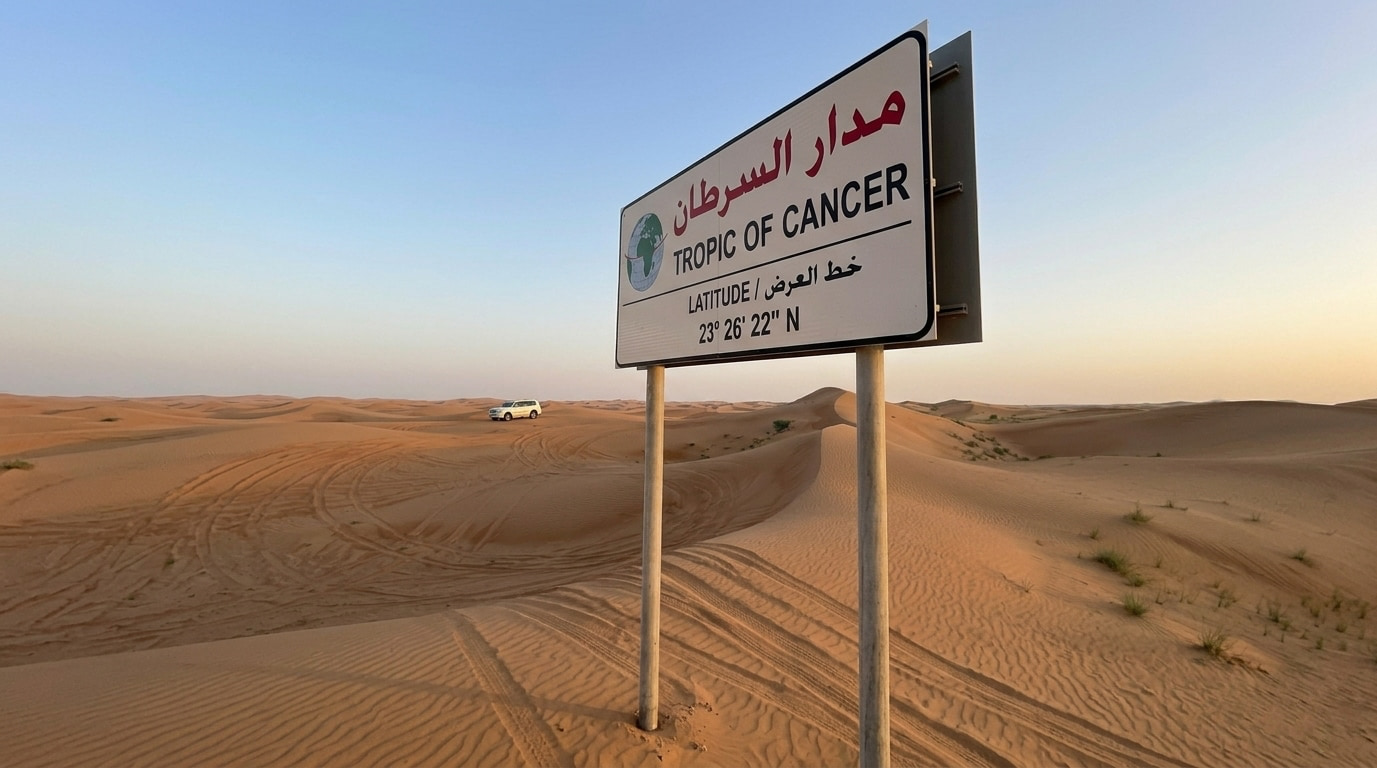
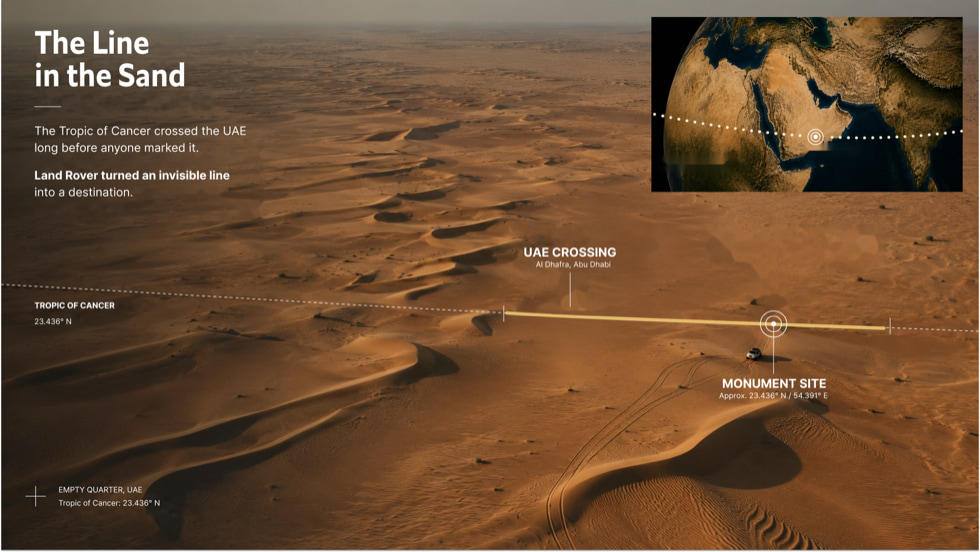
There is a small stone monument in the desert about 90 miles southwest of Abu Dhabi, standing alone on the northern edge of the Empty Quarter, the largest sand desert in the world. It marks the Tropic of Cancer, the northernmost line of latitude where the sun can appear directly overhead, one of the five named circles printed on every globe ever made. In Mexico, Spain, India, and Taiwan, the line is marked at the points where it crosses the country. Roadside signs. Monuments. Places where people pull over and take photographs of themselves standing on a fact.
In the United Arab Emirates, the line ran through the country for the better part of a century and nobody had bothered to put anything on the ground. Then, in 2013, somebody did. The somebody, as it happens, was a car company.
This is a story about what happens when a brand stops trying to be interesting and instead does something interesting. It is also, more usefully, a story about why mature brands almost always reach for the wrong tool when they sense themselves cooling off.
A little over a decade ago, Land Rover was the brand drivers in the UAE respected and their neighbors bought. The vehicles were good. The brand was old. Capability in the desert was not in dispute, and had not been since 1948. Desire was. Among men aged 35 to 50, the buyers who mattered most, the cultural drift was toward Jeep and Mercedes. Not because those vehicles handled the dunes better. Because they felt newer. In a country where a car is rarely just a car, "newer" was doing real work.
This is the trap that catches established brands more reliably than any other. Trust accumulates. Heat dissipates. The two processes happen at roughly the same rate, which means the customer who respects you most is also the customer least likely to buy your next car, because by then they are buying identity, and identity is the part of the brain that responds to novelty. By the time the category leader notices the drift, the cultural conversation has moved one parking spot over.
The standard response is to make a louder ad. Land Rover's marketing in the region at the time was 65 percent retail promotion, 35 percent traditional brand advertising, and zero percent content. That ratio is itself a kind of confession. A brand spending nothing on the question of what it means is a brand that has stopped asking.
What happened instead is the part worth studying.
Someone working on the account looked at a map of the UAE long enough to notice the Tropic of Cancer running through it, and noticed further that nothing on the ground acknowledged the line existed. This is the kind of detail that sounds trivial until you understand what a brand campaign actually needs from the physical world. It needs a reason for the camera to be there. Most automotive content fails because the camera has no business being where it is. The car drives somewhere scenic. Cut. Cut. Cut. The audience has been watching that commercial for longer than most of them have been alive.
A line in the desert that nobody had ever marked is a different proposition. It supplies the camera with a destination, the vehicle with a job, and the audience with a question the campaign can plausibly answer.
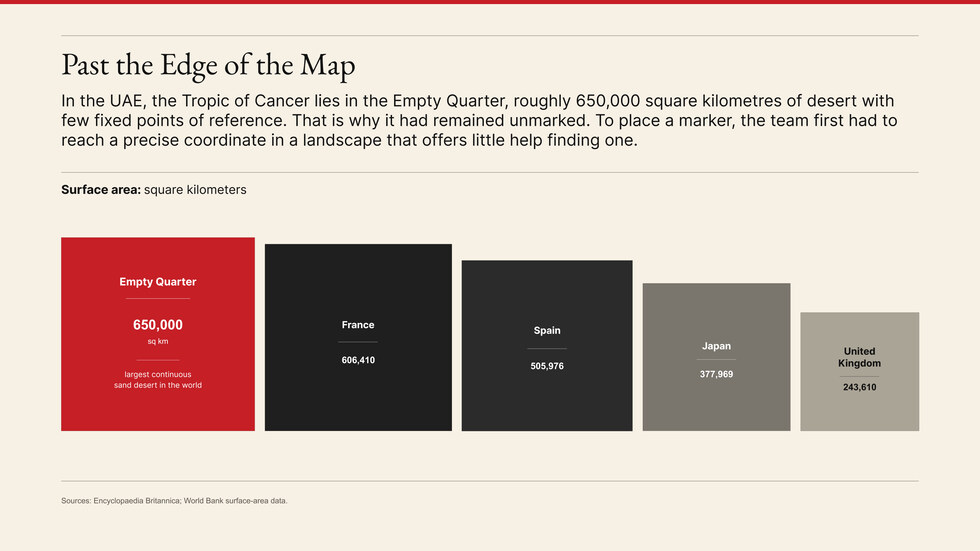
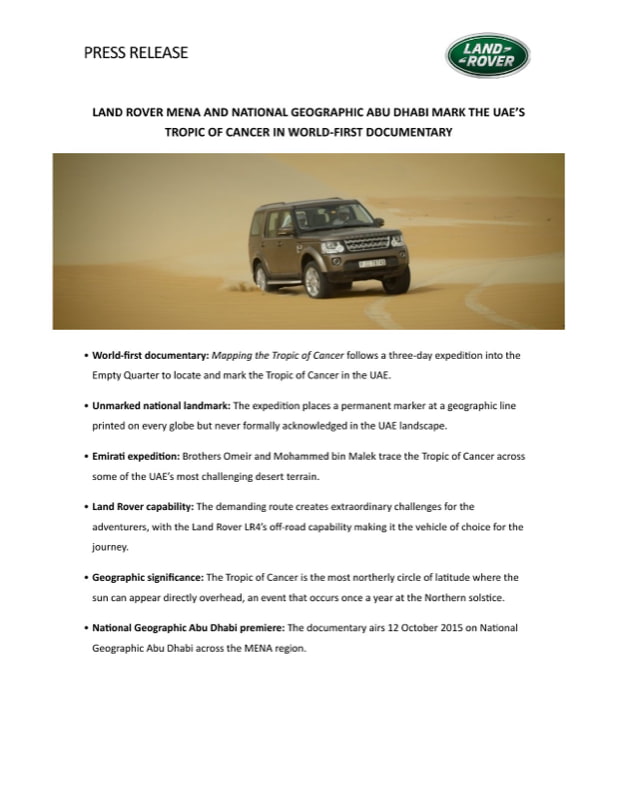
The plan was modest. Two drivers in Land Rovers would trace the unmarked line into the Empty Quarter over three days, sleeping in the sand, and place a permanent monument at the crossing point. National Geographic would film it.
That last detail is the one that changed the economics of the project. National Geographic is not a media buy. It is an editorial filter. When the network agrees to produce something, the campaign stops behaving like an advertisement and starts behaving like a story the network would have told anyway. The brand is embedded rather than imposed. The audience does not have to be persuaded to watch, because they were going to watch the documentary regardless of who paid for the trucks. The cost of attention drops to zero.
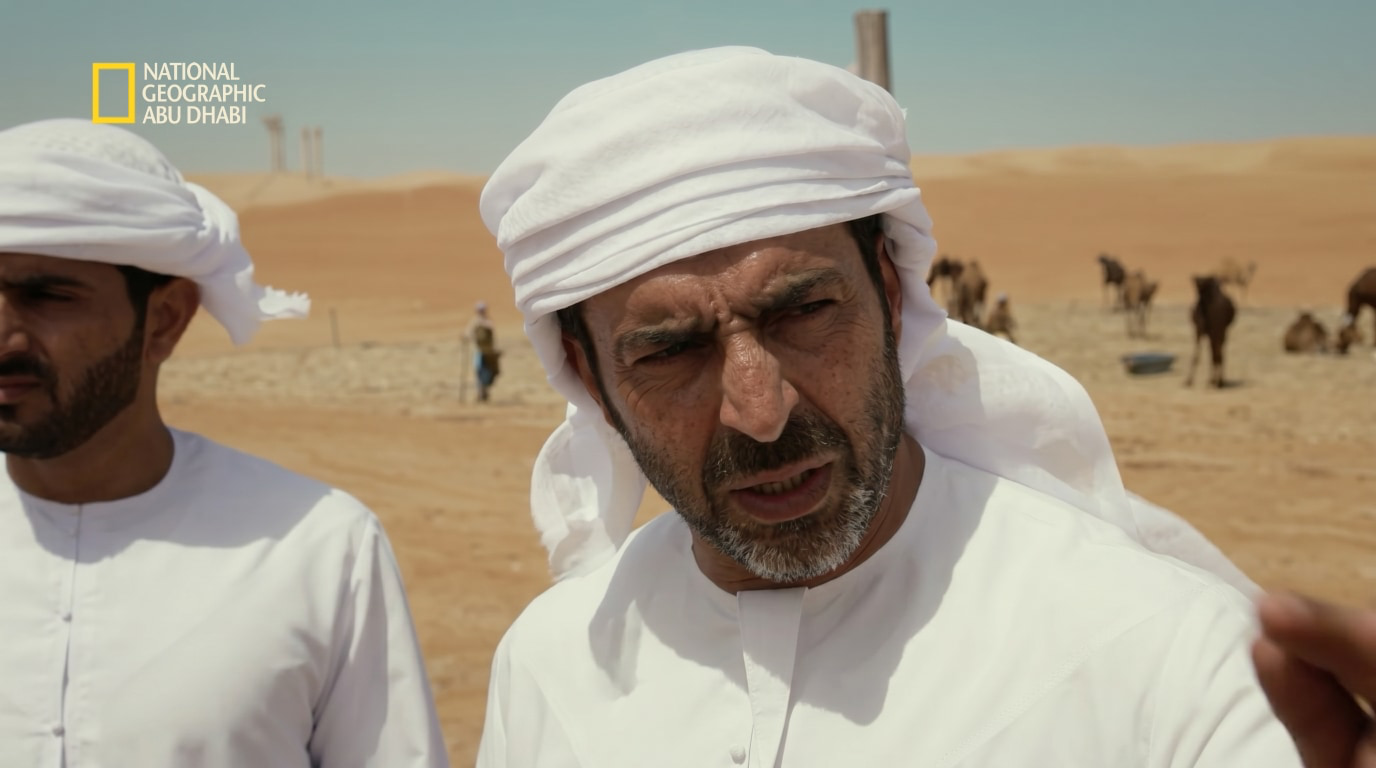
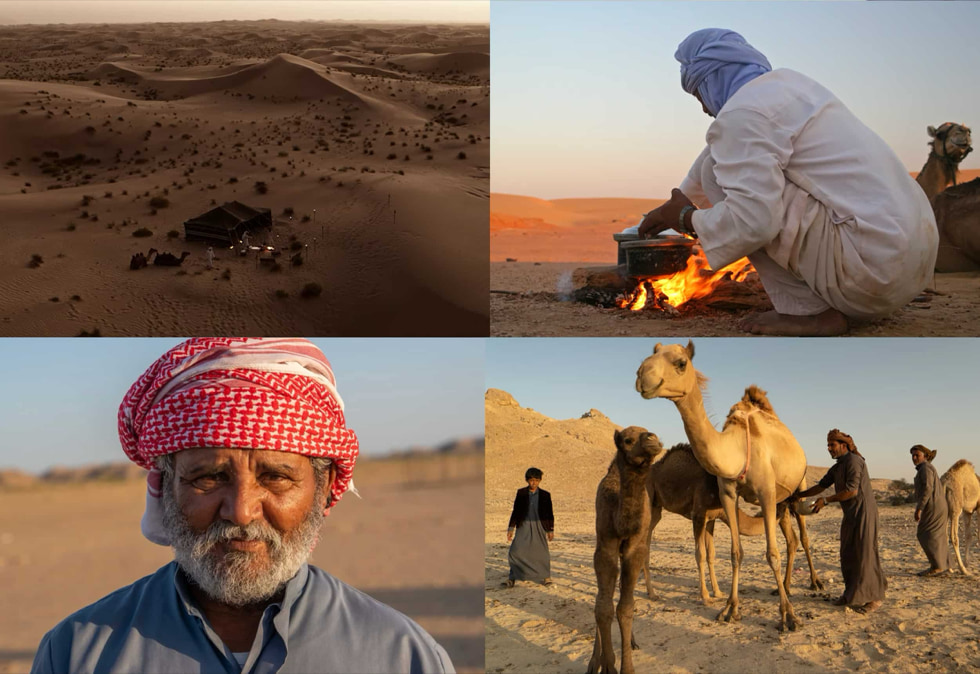
The documentary aired across the Middle East and North Africa and reached roughly 2 million viewers. Land Rover's association with adventure rose 15 percent. Brand perception scores improved by 20 points. Social engagement on the behind-the-scenes footage rose 40 percent, because the expedition now had a second life as a content library that did not look like marketing.
The monument is still there.
The Tropic of Cancer in the UAE is now physically marked on the ground because a vehicle company decided that the cheapest way to demonstrate adventure was to perform one. The marker continues to be photographed by people who neither know nor care who paid for it. That is the closest thing modern advertising has to a permanent asset, and it cost less than a single regional television buy.
The instinct, when the cultural conversation moves on, is to chase it. Make the ad louder, the spokesperson younger, the soundtrack newer. Almost none of it works. Audiences are exceptionally good at detecting when a brand is auditioning, and exceptionally unforgiving when it does.
What occasionally works is the opposite. A brand finds a thing in the world that is true, related to its product, and unclaimed. Then it puts its name on the thing and steps back.
The Tropic of Cancer was already there. The Empty Quarter was already there. The audience was already paying attention to vehicles as signals of taste and standing. Two Land Rovers drove into the sand for three days and put a stone on the line.