MEDIA RELATIONS · COMMUNICATIONS · SOCIAL MEDIA
The Flag Facebook Forgot
Facebook built a feature for one tragedy and accidentally revealed something about how platforms handle grief. One person noticed first, and knew what to do about it.
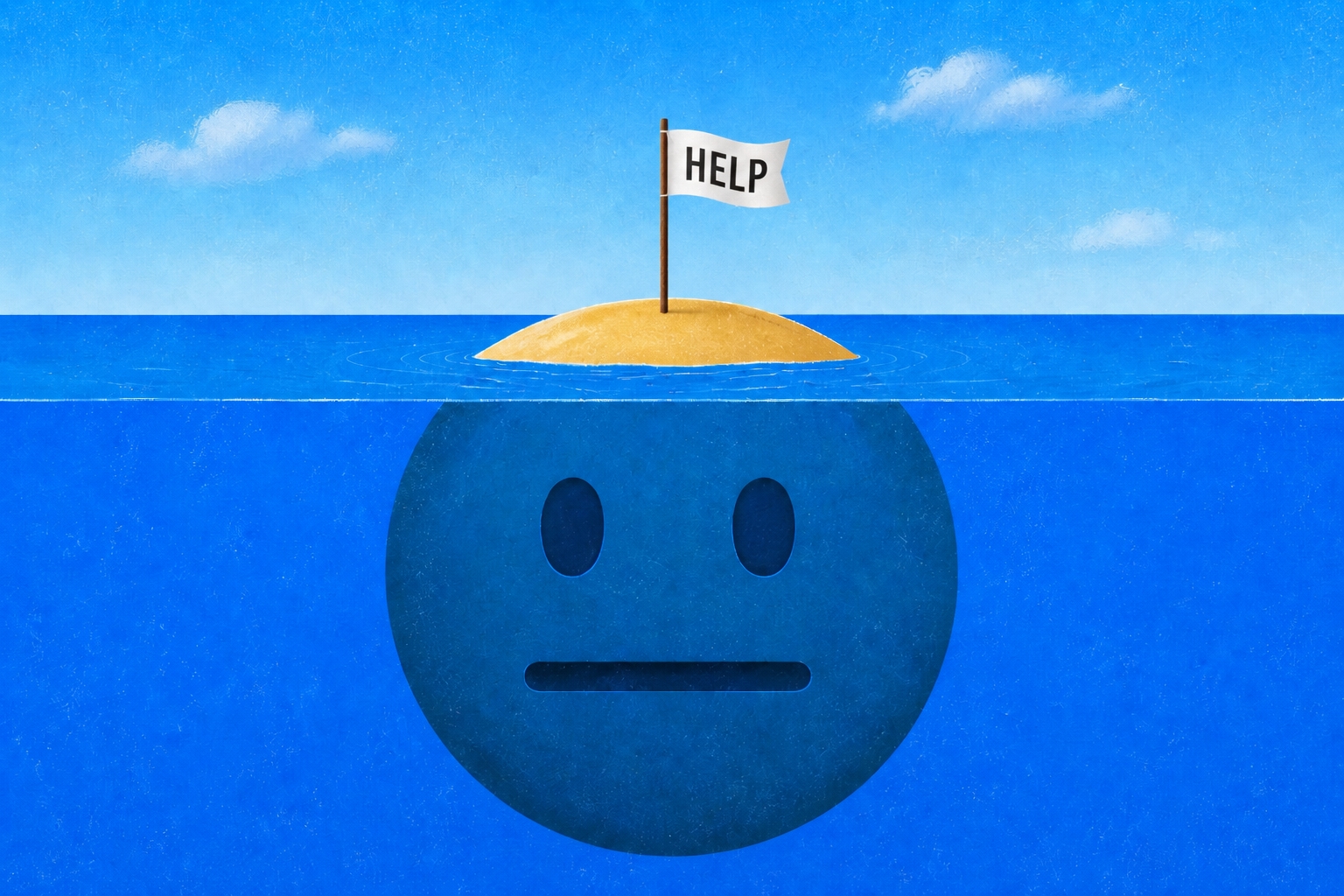
On November 13, 2015, terrorists killed 130 people across Paris. The world watched, then looked for a way to respond.
Facebook gave users one. Within days it released a temporary overlay that let people tint their profile pictures in the blue, white, and red of the French flag. The feature was simple, instantly understood, and used by millions. Grief became visible at scale for the first time on a social platform.
Then the questions started.
Why Paris and not Beirut, where bombings had killed 43 people the day before? Why one flag and not others? Why had one tragedy been given a platform-wide ritual while others were left to improvise? The criticism was not that Facebook had done something wrong. It was that Facebook had done something incomplete, and in doing so had accidentally drawn a border around empathy. Some grief was inside the feature. The rest was not.
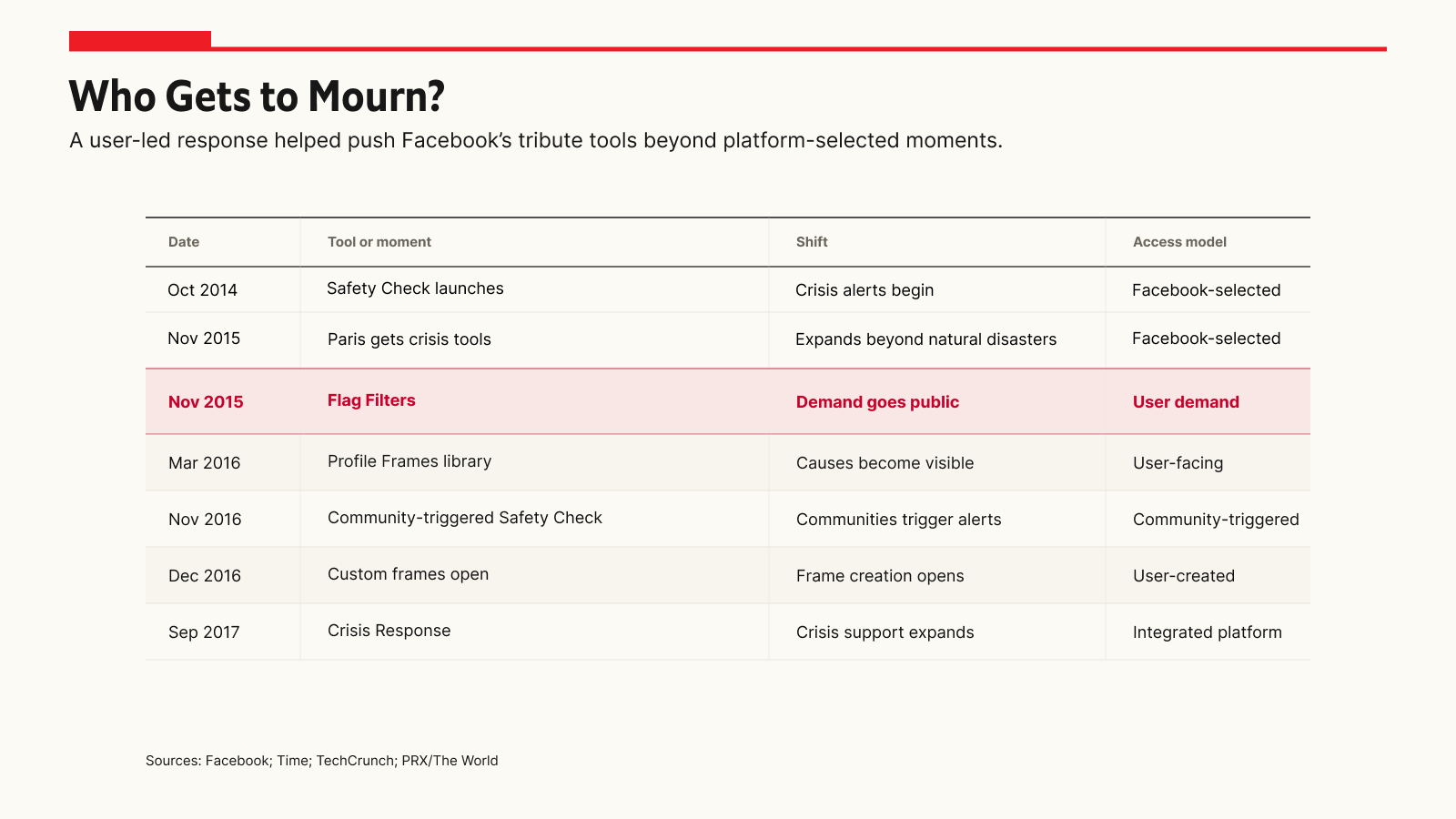
This is what large platforms do without meaning to. They build for the center and leave the edges to figure it out. The French flag filter was not a policy statement. It was a product decision made quickly under pressure, and like most product decisions made quickly under pressure, it solved for one thing and missed several others.
Hubert was not inside Facebook. He had no access to the product team, no policy lever to pull, no way to change the button the platform had built. What he had was a clear read of the situation, and an instinct for how to move inside it.
He offered to make a flag overlay for anyone who needed one.
It was a small gesture, framed simply: tell me what flag you need and I will make it. He posted it publicly and went to bed.
By morning it had become something else entirely.
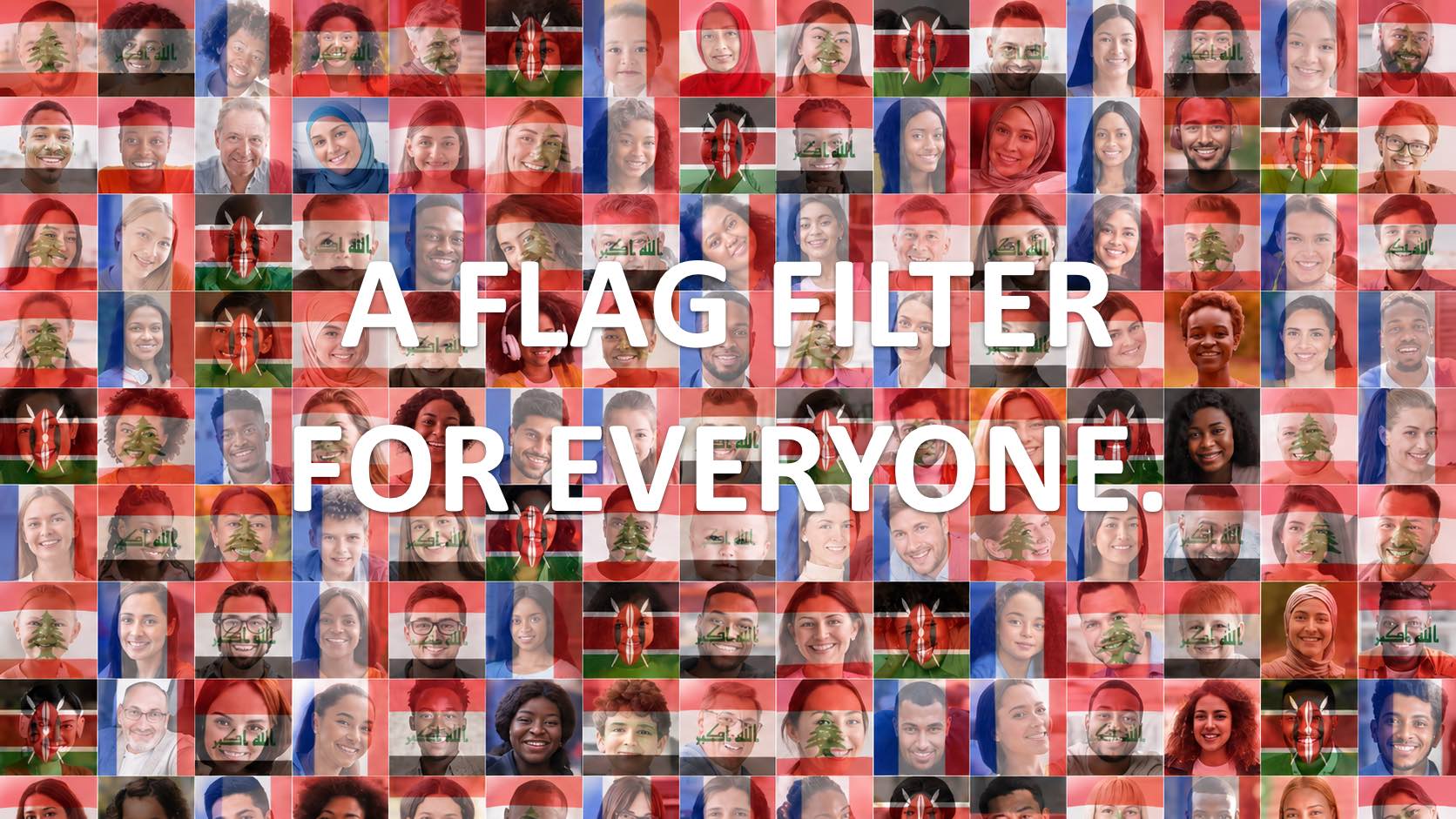
Requests arrived from dozens of countries. Some named a flag. Others explained, in detail, why the French filter had made them feel erased. They were not asking for decoration. They were asking for a way to be seen. A Lebanese user wanted to mourn Beirut. A Nigerian user wanted to acknowledge an attack closer to home. People were not competing with Paris. They were asking for the same thing Paris had been given: a tool that said, I am here and I am paying attention.
Hubert kept going. Each request came in, got built, and went back out. Speed mattered because online grief moves fast. An overlay that arrived three days later was a souvenir. One that arrived the same day was something a person could actually use.
More than 10,000 people were helped. Requests came from more than 30 countries.
But the project was also, by then, a story. And Hubert understood that the story was the more useful artifact. Making the overlays helped 10,000 people. Making the story visible could move the platform that had left them out.
So he built one. Not a celebration of what he was doing, but a careful account of what the requests revealed: that Facebook had built grief infrastructure for part of the world and left the rest without it. That users were not angry at Facebook for caring about Paris. They were asking why the caring had to stop there. He took it to the press the same way you take any story to the press, by knowing who covers this beat, why they would care, and what the angle actually is.
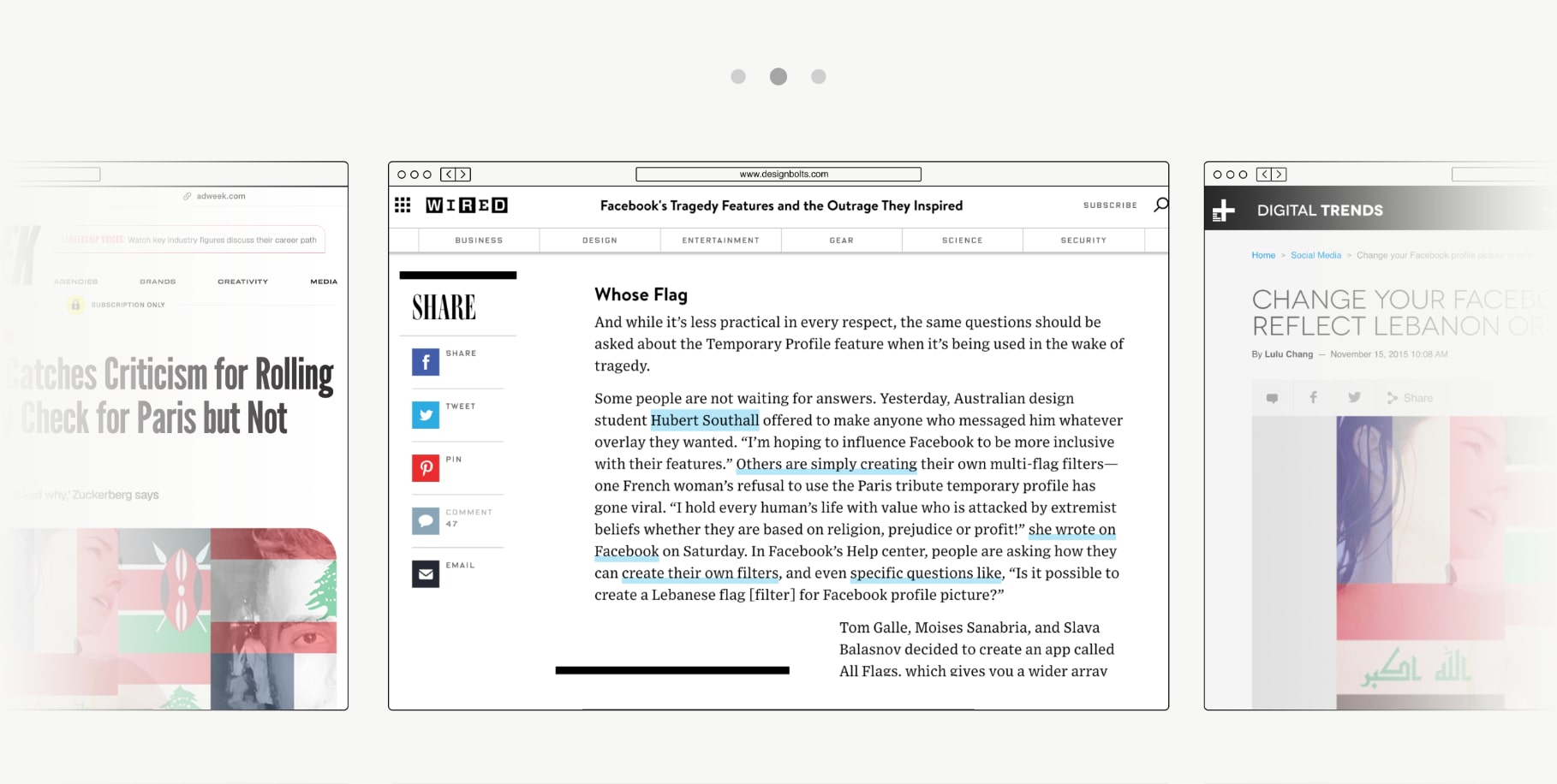
The New York Times, Digital Trends, Huffington Post, Wired, and other outlets covered it. The story reached across 41 countries.
Then Facebook reached out. Not with fanfare. A quiet message: the company had seen what Southall was doing, appreciated the contribution, and was reviewing its policies. One person had apparently moved fast enough to make the largest social network on earth stop and reconsider.
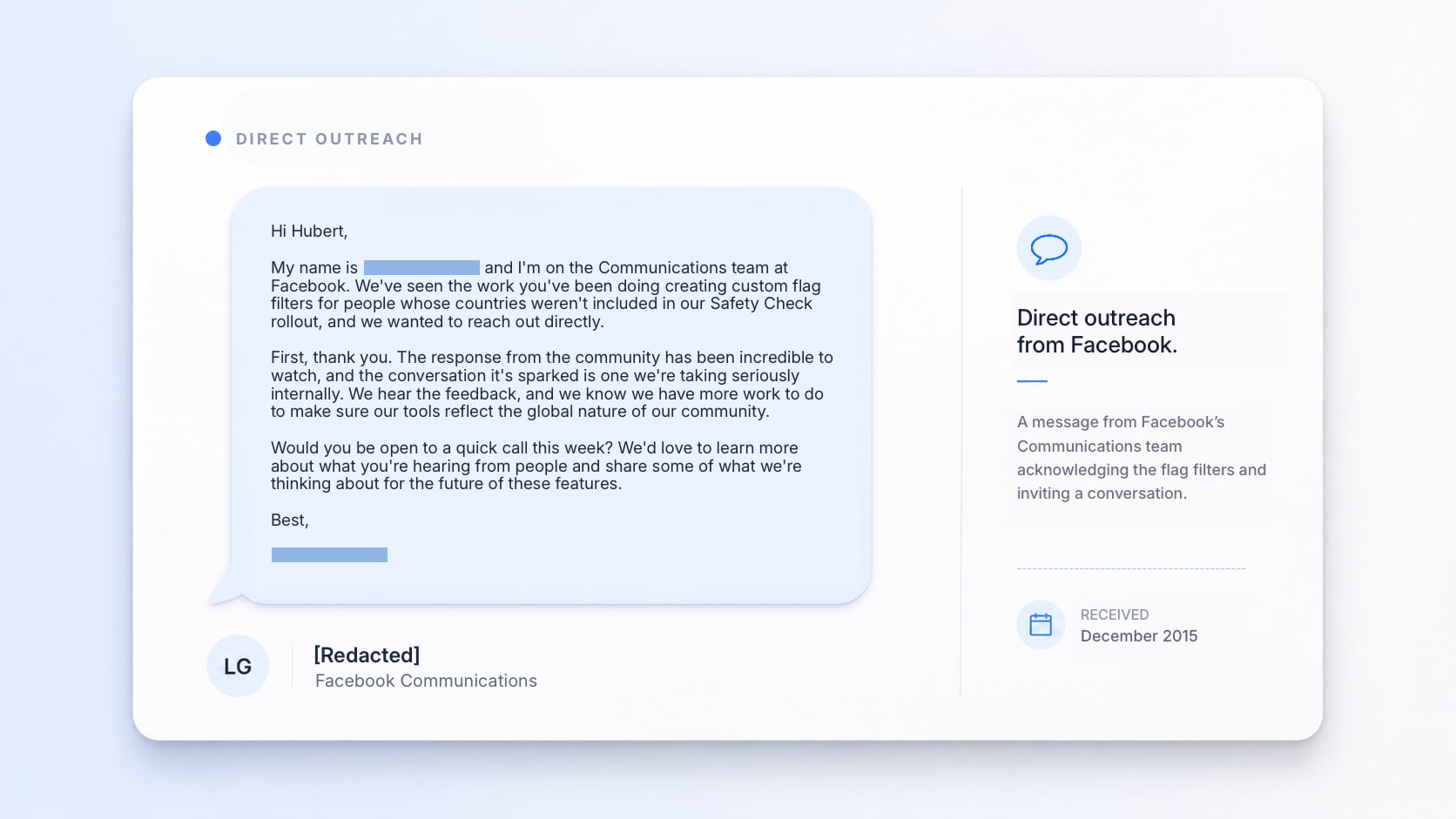
That was the ending. Not a campaign win, not a product launch, not a press release. A note from a platform saying it was looking again at something it had gotten half right.
Facebook had thousands of engineers and had built a feature for one flag. One person, working alone, surfaced what the feature had missed, built a workaround for thirty countries in a weekend, and turned it into a story the platform could not ignore. The gap between those two facts is not really about resources. It is about who was paying attention, and what they knew to do with what they noticed.
Platforms build for the center. Someone has to notice the edges, and know how to make the center look.