STRATEGY • MEDIA • COMMS
Fill Up for the Weekend
An evenly spread budget looks like caution. More often it is the cost of refusing to choose.

MobiFone was spending its media budget in seven equal portions, one for each day of the week. Data is an everyday need, which makes everyday retail messaging feel sensible. There is something reassuring about a plan like this: the even hand, casting a wide net. It looks like discipline.
The problem with sensible plans is that they often come with sensible alibis. Customers did buy credit every day. The market was never closed. No single line in the plan looked irrational. But the plan confused availability with demand; it treated every possible purchase as if it were equally probable, an assumption the numbers did not support.
For an American reader, the category needs translating. The mobile data market in Vietnam is not a market built around monthly plans, auto-pay, and annual contracts. Vietnam's mobile market is overwhelmingly prepaid. People buy data on a week by week basis, and their attachment to a carrier is thinner than the number on the SIM card suggests. If another provider has the better deal the following week, that's where they're headed. In short, networks are competing for customers on a weekly basis.
That made "message" a comfortable but incomplete diagnosis. In a commodity category, where every vendor is selling the same minutes, data, and coverage, a brand problem feels logical. It suggests that when things go wrong, it isn't the machine that needs reassessing, it just needs a fresh coat of paint. An allocation problem is less comforting.
In this case, the root cause was embedded in the media buy, not the message. In retail marketing, the only thing that matters to customers is price. When the media spending was examined against customer habits, the two had almost nothing to do with each other. Customers bought credit the way people buy gas: enough to get through the week. And they needed it on the weekend. I commissioned a study that revealed 62% of purchases fell between Friday afternoon and Saturday morning. They were filling up for the weekend. We didn't need a generic data media strategy, we needed a local gas station strategy.
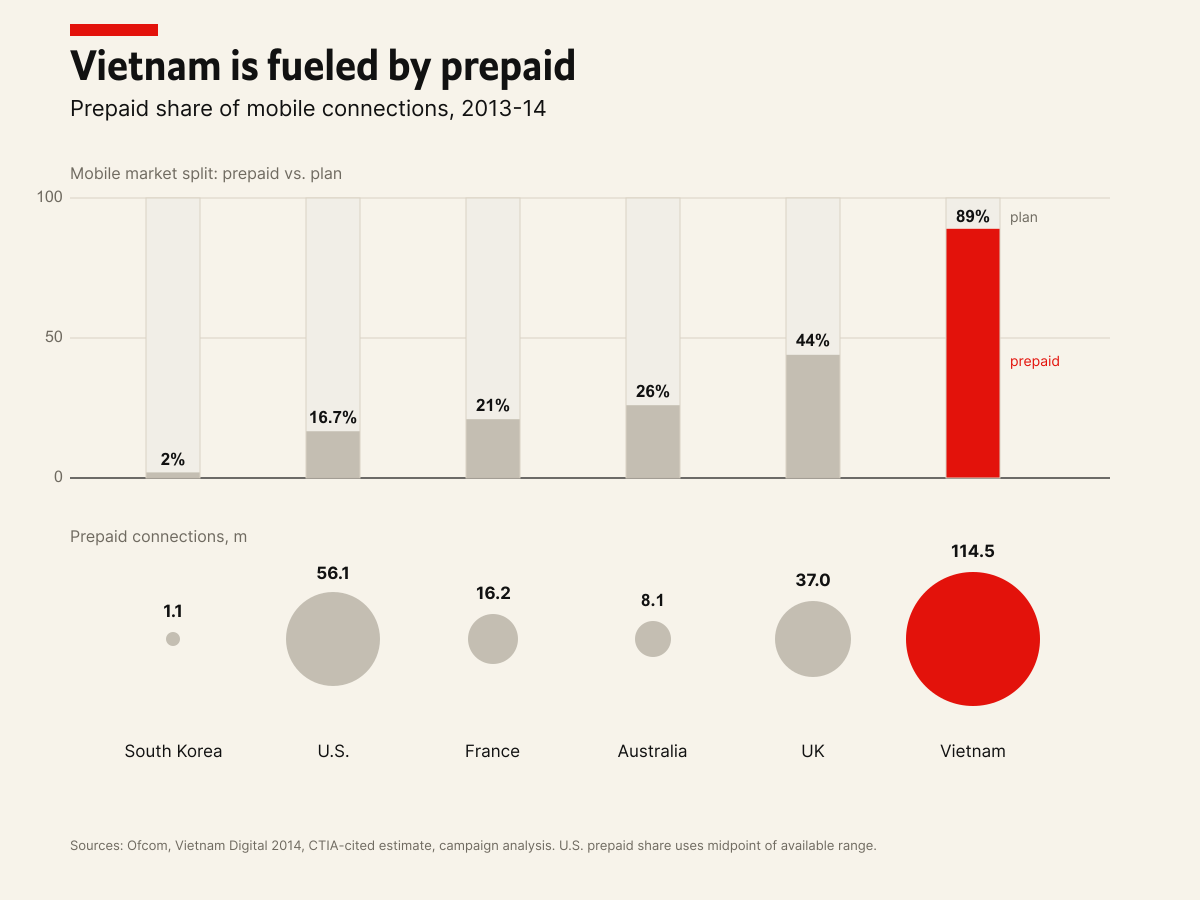
Allocating budget is a zero sum game. More investment here means less over there, and doing so can be a frightening choice. Where the safe choice is hedging, concentrating your bet will highlight your poor decision making if you choose badly. Evenness means you won't miss, even if you're sacrificing hitting the home run. In business, people don't get fired for hitting doubles.
For MobiFone, the correction was blunt, albeit we had a strong case: spend comes off the lightest days and moves into the window where buying was actually happening. The media agency resisted, for the obvious reason: always-on coverage is easier to defend than concentrated judgment. But the chief executive of MobiFone agreed it was worth testing.
The media strategy then gave birth to the campaign's best idea: a website that worked only from Friday noon to Saturday noon. Buy inside that window and the week's deal was yours. Arrive outside it and the site locked you out. This was not a gimmick. It was the argument made physical: a company deciding when it mattered, then being willing to disappear the rest of the time. In one meeting, the chief executive looked at me and said, "You better be right."
The site worked only from Friday noon to Saturday noon.
Open the live website experienceA data-driven bet is still a bet, and what it risks is not only money. It risks being wrong in public. For MobiFone, the bet paid. Market share moved from 19% to 27% in six months. Return on advertising spend rose by 40%, not because the advertising became cleverer, but because it stopped running on the days when nobody was buying. In fact, the messaging was still generic, price-driven retail marketing. The intelligence was not in what the company said. It was in when it chose to say it.
What made the old plan so costly was not that it ignored data. It had plenty of data. It ignored the pattern inside the data. The same blindness shows up wherever demand has a rhythm and the safe move is to pretend it is flat. Small businesses know this well. Restaurants know the lunch rush matters; grocery stores know the pre-dinner rush is not mid-morning; coffee shops know Monday morning is not Saturday afternoon. But inside larger companies, where a safe-looking plan can still hit your quarterly goals, it is easy to forget the week had a shape.
That is the trap. The cost of hedging rarely shows up as a loss. It shows up as a baseline that was always lower than it should have been, which is why it can run for years inside a company that prides itself on rigor. A visible problem will always attract attention before an invisible one. The chief executive saw a brand problem because that was the problem the room had learned to show him.
The question was never which day to bet on. It was whether anyone was willing to admit that the even spread was not caution, it was cost.